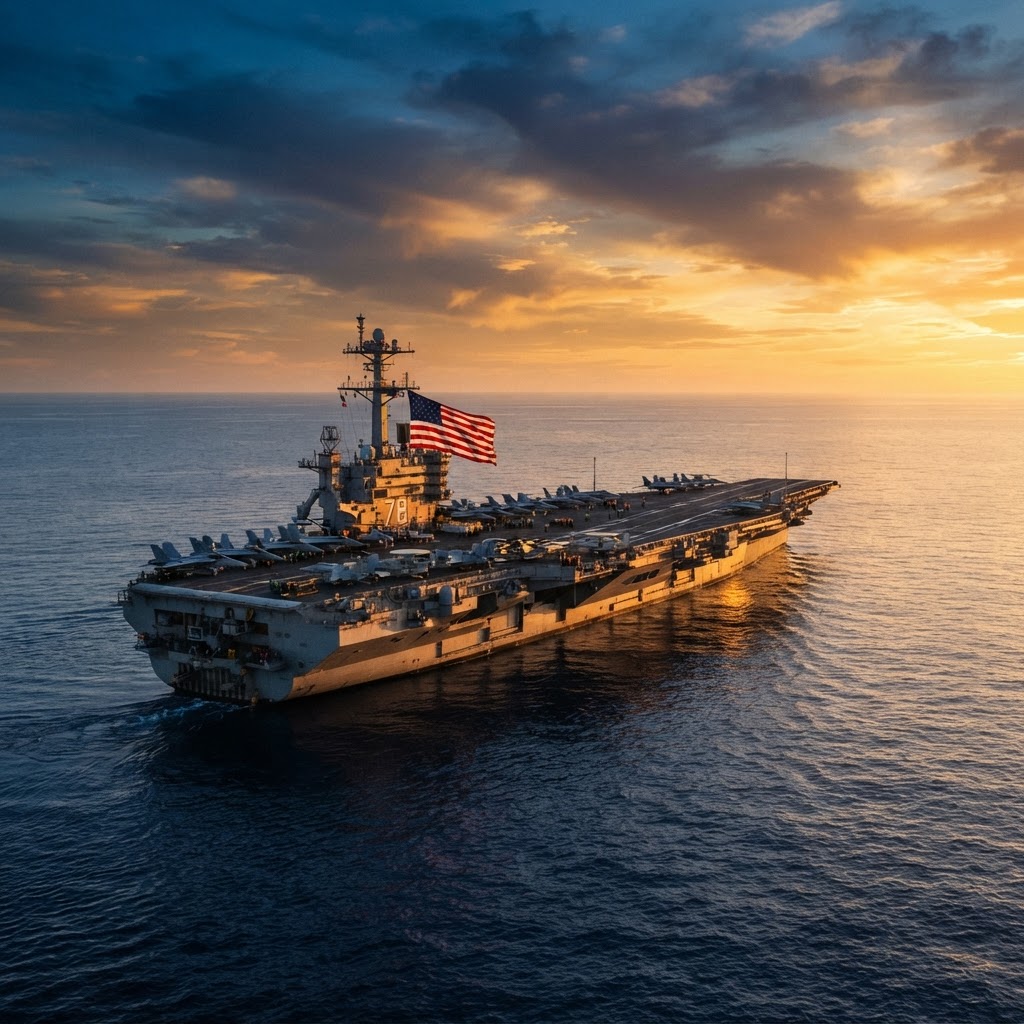
An open letter from the National Coalition of Black Veteran Organizations is demanding the Navy preserve the name of the future USS Doris Miller (CVN-81) — the first aircraft carrier ever named for an African American and the first named for an enlisted sailor — amid reports the vessel could be renamed in honor of President Donald J. Trump.
The letter, addressed to the Secretary of the Navy and authored by Chairman Charles Blatcher III, is not a partisan attack. It is a plea to protect an honor already bestowed upon a Black sailor whose courage at Pearl Harbor became a defining story of American valor — and whose name, the coalition argues, should not be erased for political convenience.
Who Was Doris "Dorie" Miller?
Doris Miller enlisted in the United States Navy in 1939, at a time when racial segregation restricted Black sailors almost entirely to service roles — mess attendants, stewards, and galley work. He was not trained for combat. He was not supposed to touch a weapon. The Navy of his era had decided, in advance, that men who looked like him were not fit for battle.
Then came December 7, 1941.
Miller was serving aboard the USS West Virginia at Pearl Harbor when Japanese forces launched their surprise attack. In the chaos, he carried wounded sailors to safety — including his mortally wounded captain, Mervyn Bennion. He then manned a .50-caliber anti-aircraft gun he had never been trained to operate and fired at enemy aircraft until he ran out of ammunition.
Fifteen White sailors were awarded the Medal of Honor for their actions that day. Miller — the only Black sailor to receive comparable national recognition — was awarded the Navy Cross. Admiral Chester W. Nimitz personally presented the decoration at Pearl Harbor in May 1942, making Miller the first Black sailor to receive the Navy Cross.
Miller returned to sea and was killed in action on November 24, 1943, when the USS Liscome Bay was torpedoed and sunk in the Pacific. He was 24 years old.
The Historic 2020 Naming
In 2020, the Navy announced that CVN-81, a Gerald R. Ford-class nuclear aircraft carrier, would be named the USS Doris Miller. The decision was historic on two counts: it would be the first aircraft carrier named for an African American, and the first named for a sailor recognized for actions performed while serving in the enlisted ranks.
Then-Acting Secretary of the Navy Thomas B. Modly explained that the selection honored enlisted sailors of every race, religion, and background — a recognition that courage in service is not determined by rank or station.
For Black veterans, the naming was more than symbolic. It was an acknowledgment — long overdue — that generations of enlisted Black sailors had served faithfully and fought bravely for a nation that had denied them equal opportunity, equal training, and equal recognition.
Why This Matters
Ship names carry history across generations. A carrier will sail for 50 years. Thousands of sailors will serve aboard her. They will learn the story behind the name. When that name is Doris Miller, every one of them learns that a Black mess attendant — a man the Navy once tried to keep away from combat — became one of the first American heroes of World War II. Removing that name doesn't just dishonor one man. It erases a lesson the entire fleet was meant to carry forward.
The Controversy: Reports of a Possible Rename
Reports have surfaced that the Department of the Navy is considering removing Miller's name from CVN-81 and potentially renaming the vessel in honor of President Donald J. Trump. The coalition's letter does not diminish the service or position of any president. Its argument is narrower and more principled: a sitting or former president can be honored in many appropriate ways without displacing the name of a sailor who gave his life in defense of the nation.
The coalition also continues to call for Miller's Navy Cross to be upgraded posthumously to the Medal of Honor — arguing that his actions under enemy fire, performed while serving in a segregated Navy that denied him combat training and equal opportunity, meet the standard for the nation's highest military decoration.
The Full Open Letter
From the National Coalition of Black Veteran Organizations · Chairman Charles Blatcher III
Subject: Preserve the Name of the Future USS Doris Miller (CVN-81)
Dear Mr. Secretary:
On behalf of the National Coalition of Black Veteran Organizations, I write to express our profound concern and strong disapproval regarding reports that the Department of the Navy is considering removing the name of Doris "Dorie" Miller from the future Gerald R. Ford-class aircraft carrier CVN-81 and potentially renaming the vessel in honor of President Donald J. Trump.
We respectfully urge you to reject any proposal to rename this carrier and to reaffirm publicly that CVN-81 will be commissioned as the USS Doris Miller.
This is not a partisan objection, nor is it intended to diminish the service or position of any president. Our concern is the preservation of an honor already bestowed upon an American sailor whose extraordinary courage, sacrifice, and historical significance are beyond dispute. A sitting or former president can be honored in many appropriate ways without displacing the name of a sailor who gave his life in defense of our nation.
Doris Miller enlisted in the United States Navy in 1939, when racial segregation restricted Black sailors primarily to service positions. He was serving as a mess attendant aboard the USS West Virginia when Japanese forces attacked Pearl Harbor on December 7, 1941.
During that attack, Miller helped move wounded sailors to safety, including his mortally wounded captain. Fifteen White sailors were awarded the Medal of Honor for their actions during the attack on Pearl Harbor. Miller was the only Black sailor to receive comparable national recognition for his actions that day, but he was awarded the Navy Cross rather than the Medal of Honor. Admiral Chester W. Nimitz personally presented the Navy Cross to Miller at Pearl Harbor in May 1942, making him the first Black sailor to receive that decoration.
The National Coalition of Black Veteran Organizations has long called for Miller's Navy Cross to be upgraded to the Medal of Honor. We continue to believe that his extraordinary actions under enemy fire, performed while serving in a segregated Navy that had denied him both combat training and equal opportunity, warrant our nation's highest military decoration.
Miller later returned to sea and was killed in action on November 24, 1943, when the USS Liscome Bay was torpedoed and sunk during operations in the Pacific. He was only 24 years old.
The Navy's 2020 decision to name CVN-81 in Miller's honor was historic. The USS Doris Miller is to be the first aircraft carrier named for an African American and the first named for a sailor recognized for actions performed while serving in the enlisted ranks. In announcing the name, then-Acting Secretary of the Navy Thomas B. Modly explained that the selection honored enlisted sailors of every race, religion, and background.
That meaning should not now be discarded.
The name USS Doris Miller represents far more than one individual. It honors generations of enlisted sailors whose courage and contributions were too often overlooked. It holds particular significance for Black veterans and service members who served faithfully even when the nation and its Armed Forces denied them equal opportunity and recognition.
Removing Miller's name would send a deeply troubling message to Black veterans, active-duty personnel, military families, and all Americans who believe that valor and sacrifice should transcend politics. It would transform a unifying tribute to battlefield courage into a source of unnecessary division. It would also undermine public confidence in the permanence and integrity of military honors.
Ship names carry history across generations. Sailors serving aboard the future USS Doris Miller should have the opportunity to learn Miller's story and carry his legacy throughout the world. His name aboard one of America's most powerful warships would demonstrate that courage is not determined by rank, race, or assigned duty.
We therefore request that the Department of the Navy:
- Publicly confirm that CVN-81 will retain the name USS Doris Miller;
- Reject any proposal to transfer Miller's name to a different or less prominent vessel;
- Consult with the Miller family and representatives of Black veterans' organizations before considering any action affecting this historic designation;
- Preserve the Navy's original commitment to Doris Miller and the generations of enlisted sailors his name represents; and
- Support a renewed review of Miller's record for the posthumous upgrade of his Navy Cross to the Medal of Honor.
The USS Doris Miller must remain the USS Doris Miller. The nation should not erase an earned honor to bestow a political one. We respectfully request your written response and would welcome an opportunity to discuss this matter with you or your designated representatives.
What's at Stake for Black Veterans
For the National Coalition of Black Veteran Organizations and the generations of Black service members it represents, this fight is about more than a single ship. It is about whether military honors — once earned and publicly bestowed — are permanent, or whether they can be traded away when politically convenient.
Black veterans have spent decades advocating for fair recognition: for the desegregation Truman ordered in 1948, for the Medal of Honor belatedly awarded to seven Black World War II veterans in 1997, and now for Doris Miller's name to stay where the Navy, in a moment of clarity, put it.
The Bottom Line
Doris Miller did not ask to be a hero. The Navy did not ask him to be one either — it barely allowed him to be a sailor. He became a hero anyway, in the worst seven hours in American military history, carrying wounded men and firing a gun he was never trained to use. The Navy gave his name to a carrier in 2020. The right thing to do — the only thing to do — is let it stand.
How to Make Your Voice Heard
- Contact your representatives in Congress and ask them to publicly support retaining the USS Doris Miller name on CVN-81.
- Share this story with veterans, military families, and community organizations.
- Support Black veteran organizations advocating for fair recognition of Black military service across all eras.
- Register and vote. As the coalition's own call-to-action reminds us: our history, our rights, and our future depend on it. Visit vote.gov/register.
This article includes an open letter originally circulated by UnityFirst.com on behalf of the National Coalition of Black Veteran Organizations, Chairman Charles Blatcher III. The letter is republished here in full for the record. Editorial commentary is labeled and represents the perspective of BlackAtlanta.







Editor's Note — Commentary & Context
This is not a story about one political figure versus another. It is a story about whether the United States keeps its word to the men who bled for it when that country still would not let them eat at the same table. Doris Miller was a mess attendant — a servant's title in a segregated Navy — and he became a hero anyway. The least a grateful nation can do is let his name ride on the bow of a warship. That is the standard the Black veterans in this letter are defending, and it is a standard worth defending.