There Is No Equivalent to This
I want to try to describe something to you that resists description. Not because it's complicated, but because the experience of Morehouse Homecoming is one that operates on frequencies that language only partially captures. I'm going to try anyway because this story deserves to be told, and because if you have never been — alumni or not — you should understand what you've been missing.
What Happens When the Brothers Come Back
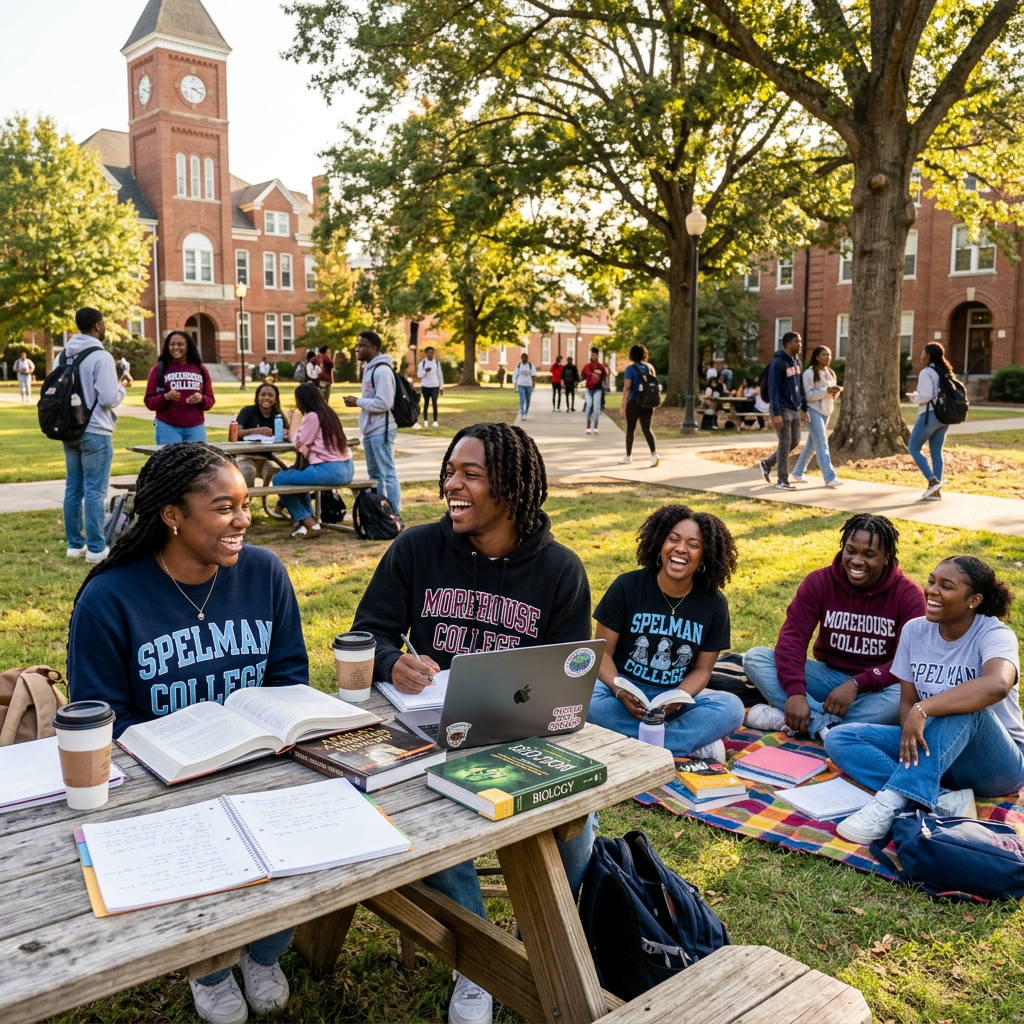
Morehouse Homecoming is not a weekend. It is a convergence. Over the course of a week in October, the Atlanta University Center becomes the center of the Black professional universe. Alumni return from every corner of the country and the world — from Nairobi and London, from Silicon Valley and Wall Street, from courtrooms and operating rooms and film sets and classrooms and government offices. They converge on a small campus in the Southwest Atlanta neighborhood of Vine City and something remarkable happens.
They become their 20-year-old selves again. Not in a regressive way. In the way that means the barriers and performances and professional armor that we carry in the world dissolve in the presence of people who knew you before you built them. The laughter is different. The conversation is different. The ease is different.
I have watched 60-year-old men with gray hair and significant titles act like freshmen when a certain song comes on at the homecoming step show. I have watched men who compete fiercely in the marketplace embrace each other with a sincerity that makes you understand what the word brotherhood actually means.
What the Step Show Means
The step show is where the AUC's fraternities compete in the ancient tradition of stepping — synchronized percussive movement, call and response, competitive excellence. But describing the step show as a performance misses what it actually is.
It is a demonstration of what Black men can build together when they commit to collective excellence. The precision. The creativity. The brotherhood visible in the coordination of bodies moving as one. When you sit in that audience and watch, you understand something about what it means to be part of something larger than yourself. Something that was here before you and will be here after you.
The Broader Week: Black Atlanta at Its Best
Morehouse Homecoming does not stay on campus. The parties, the gatherings, the brunches, the events spread through Atlanta's entire social landscape. Venues that run Homecoming weekend events fill up weeks in advance. The city's best restaurants see reservation books go fully committed. Hotels reach capacity from the Westside to Buckhead.
This is Black Atlanta operating at maximum social intensity. And what strikes you, if you watch it clearly, is that this is not escapism or indulgence. This is a community celebrating its own existence, honoring what it has built, and investing in relationships that will carry it forward. There is purpose underneath the celebration.
For Those Who Didn't Go to Morehouse
You do not need to be an alumnus to experience the energy of HBCU Homecoming in Atlanta. Spelman, Clark Atlanta, and Morris Brown each have their own traditions and their own homecoming seasons. The community events surrounding all of them are open to the city.
But I would ask anyone who has not attended a Morehouse Homecoming to consider going at least once as an observer. Not to party. To witness. To see what it looks like when Black men who have been told in a thousand ways what they cannot do, gather together in the city that produced them and demonstrate unambiguously what they have.
That sight will change something in you. I promise it will.