Something Has Shifted
I have been a mental health advocate in Atlanta for over a decade, and I am watching something happen in the Black community right now that I want to name clearly because it deserves to be celebrated. The conversation about mental health — therapy, boundaries, burnout, intergenerational trauma, anxiety, depression — has changed in Black Atlanta in ways that would have seemed extraordinary even five years ago.
People are talking about it. Not in hushed voices or with shame attached. In the barbershop. At brunch. On podcasts and at professional conferences. Black men in Atlanta are saying the word therapy out loud and meaning it as a positive. Black women who have spent decades being the strong ones are giving themselves permission to need care. This is a shift. It is real. And it deserves recognition.
Why This Matters Specifically for Our Community
The burden of historical and ongoing racial stress on the Black psyche is documented, real, and cumulative. This is not a soft concept. Research consistently shows that racism — individual, systemic, and chronic low-grade stress from navigating predominantly white institutions — produces measurable physiological and psychological effects.
Add to this the intergenerational patterns that many Black families carry — the trauma responses that were adaptive in contexts of genuine threat but become limiting when the immediate threat has changed — and the case for intentional mental health investment in the Black community is not just compelling. It is urgent.
Strength, in the tradition I was raised in, meant enduring without complaint. That was a survival strategy. I respect what it protected. But survival strategies are not designed for thriving. And the standard now is thriving.
Finding a Black Therapist in Atlanta
The single most cited barrier to therapy in Atlanta's Black community is the difficulty of finding a therapist who understands the cultural context. "I don't want to have to explain what code-switching is. I don't want to spend the session educating someone about my experience." This is a legitimate concern and it points to a real need.
The resources that are specifically addressing this need in Atlanta:
Therapy for Black Girls (therapyforblackgirls.com) maintains a therapist directory that allows you to specifically search for Black therapists accepting new clients in Atlanta. This is the starting point for most Black women seeking affirming care.
The Boris Lawrence Henson Foundation, founded by Taraji P. Henson and with significant Atlanta roots, has worked to expand access to mental health resources for Black communities. Their resources and referral network are worth exploring.
The Association of Black Psychologists maintains a national directory. The Atlanta chapter can connect you to practitioners in the metro area.
Word of mouth within the Atlanta Black professional community remains one of the most reliable referral systems. If you have a therapist you trust, recommend them specifically. The difference a recommendation from someone who shares your experience makes is significant.
The Practices Beyond Therapy
Therapy is not the only path to mental wellness and I want to name the practices that Atlanta's Black community is collectively building as part of a holistic wellness culture.
Community is medicine. The social connection available in Atlanta — through faith communities, professional organizations, friendship networks, and family — is clinically protective against depression and anxiety. The investment in relationships is not soft. It is preventive healthcare.
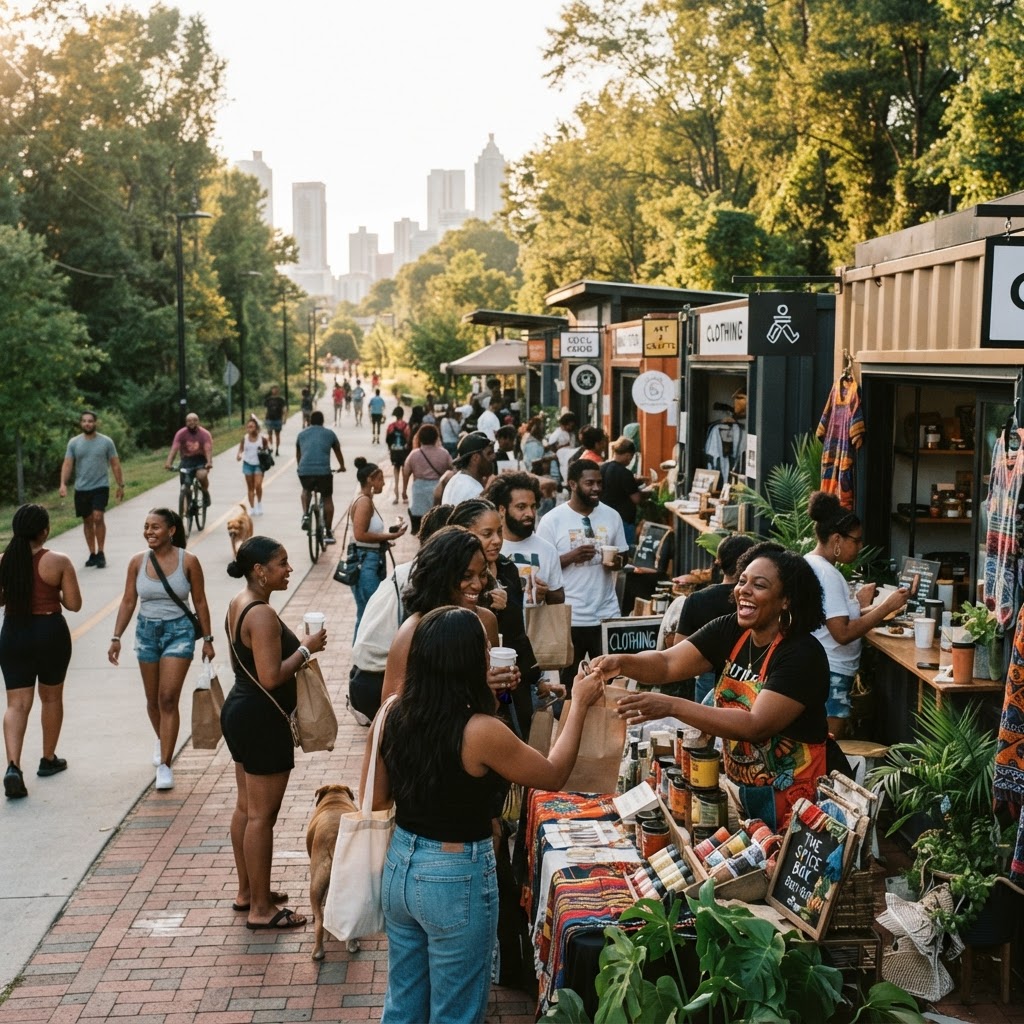
Movement is medicine. The research on exercise as a first-line intervention for mild to moderate depression is robust. Atlanta's Beltline, parks, fitness communities, and outdoor spaces are public health infrastructure. Use them accordingly.
Boundaries are medicine. The capacity to say no — to the obligation that drains without replenishing, to the relationship that takes without giving, to the commitment that belongs to a version of yourself you've outgrown — is a skill that therapy often helps build but that can be practiced daily regardless of whether you're currently in a therapeutic relationship.
The New Standard
Healing is the standard now. The generation of Black Atlanta professionals leading this city in business, politics, culture, and community is also leading a reorientation toward wholeness. That is not weakness. That is the highest form of strength — the kind that builds things that last.
You deserve care. All of it.