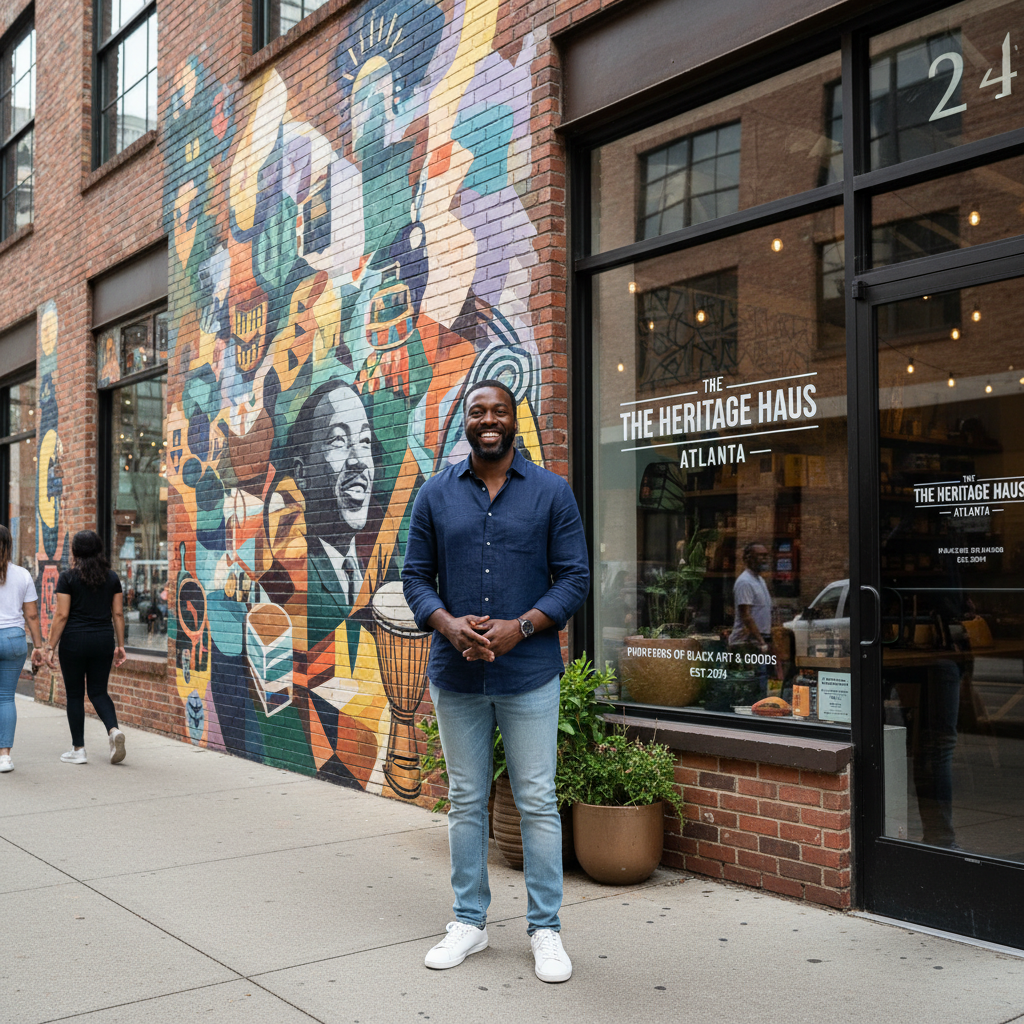
The Brand Can Wait. The Building Cannot.
I'm going to say something that's going to make some people in Atlanta's entrepreneur community uncomfortable. Most Black business owners in this city have their priorities backwards. They invest in their brand before they invest in their building. They pay for content creation before they pay toward commercial real estate. They own a beautiful logo and rent the space it's displayed in.
I understand how it happens. Brand is visible. Brand is shareable. Brand gets Instagram engagement and industry recognition and invitations to panels where you talk about brand. Property is invisible. Property is paperwork. Property doesn't photograph well.
But property is the thing that lasts. Ownership is the goal. Always has been.
"Nobody has ever inherited a logo. But families have been transformed by inherited land."
The West End Is Telling You Something — Are You Listening?
Drive down Ralph David Abernathy Boulevard right now. Watch what is happening to the West End. Property that sat ignored for decades is being purchased — by developers, by institutions, by investors who understand that Atlanta's growth trajectory points directly through historically Black neighborhoods.
Black entrepreneurs who owned property in the West End ten years ago are sitting on life-changing equity today. Black entrepreneurs who didn't are watching their rent increase while someone else's asset appreciates. The lesson is not subtle. It is right there on the street.
South Fulton is the same story at an earlier chapter. Cascade, East Point, College Park — all corridors where the window for affordable entry is open, but not indefinitely. Build something that lasts means you have to build it before everyone else arrives.
The Real Cost of Renting Your Business Home
Here is a calculation I want you to run. Take your monthly commercial rent. Multiply it by 12. That is your annual payment toward someone else's mortgage. Multiply it by 10. That is a decade of wealth transfer from your pocket to your landlord's portfolio.
The average Black business owner in Atlanta pays between $2,500 and $6,000 per month in commercial rent. At the lower end, that's $300,000 over ten years — not including rent increases. At the higher end, it's $720,000. In either scenario, zero of that creates equity for you or your family.
Ownership is not just a better deal. It is a fundamentally different relationship to your business. When you own the building, the business and the asset grow simultaneously. When you sell the business, you still have the building. That building can be rented to the next business. The asset perpetuates.
How to Start: The Minimum Viable Property Strategy
I am not telling you to go purchase a $2 million commercial property next week. I am telling you to start building toward ownership with the same intensity you build toward brand. Here is what that looks like practically.
First: if you own a home, you have equity that may be deployable. A cash-out refinance or HELOC can provide a down payment for a small commercial or mixed-use property. Second: form a LLC with two or three other entrepreneurs you trust and pool resources toward a small multi-unit property. Third: look at SBA 504 loans specifically designed for owner-occupied commercial real estate. The down payment requirement is as low as 10% for established businesses.
None of these paths are instantaneous. All of them are achievable within a 24-36 month plan from where you stand today.
What Comes Next Belongs to Owners
Atlanta is at an inflection point. The city's growth is documented, projected, and accelerating. The question is not whether the next decade will produce significant wealth. The question is who captures it.
In every previous cycle of Atlanta's expansion, Black residents and entrepreneurs were positioned to benefit and were systematically excluded from doing so. Urban renewal. Freeway construction through Vine City. The displacement of Auburn Avenue's business district. We have read this chapter before.
The difference now is access to information, access to capital instruments, and a community of Black entrepreneurs who can build together. The window is open. It will not stay open forever.
Build the brand if you want. Post the content. Design the logo. But do this week — get a consultation with a commercial real estate attorney, look at SBA 504 loan eligibility, drive through South Fulton and East Point and look at what's available. Take one concrete step toward ownership.
The brand lives on Instagram. The building lives in your estate. Build accordingly.