100 Black Men of Atlanta: 40 Years of Mentoring, Education, and Empowerment
For four decades, 100 Black Men of Atlanta, Inc. has stood as one of the city's most consequential African-American volunteer organizations—turning mentorship into measurable outcomes, scholarships into college degrees, and a single 1986 meeting into a movement that has reshaped the lives of thousands of Atlanta Public Schools students. This is the complete history of 100 Black Men of Atlanta, its founding by entrepreneur Nathaniel R. Goldston III, its role in creating 100 Black Men of America, Inc., and the programs—chief among them Project Success—that have made the Atlanta chapter one of the largest and most impactful in a worldwide network of more than 100 chapters.
The Origins: From a 1963 New York Meeting to a National Idea
The story of 100 Black Men of Atlanta does not begin in Georgia. It begins in New York City in 1963, when a group of concerned African-American men—businessmen and industry leaders including David Dinkins (who would later become mayor of New York City), Robert Mangum, Dr. William Hayling, Nathaniel Goldston III, Livingston Wingate, Andrew Hatcher, and baseball pioneer Jackie Robinson—began meeting to explore ways of improving conditions in their community. That gathering gave rise to what would become known informally as "The 100": a philosophy of Black men pooling their time, talent, and treasure to mentor and uplift the next generation.
That 1963 meeting seeded a model that would, over the next two decades, spread city by city until independent 100 Black Men chapters existed in communities across the United States. Each chapter operated locally, but the leaders recognized that a coordinated national structure could amplify their reach. That realization set the stage for the founding of both 100 Black Men of Atlanta and 100 Black Men of America, Inc.
How 100 Black Men of Atlanta Was Founded in 1986
In 1986, Atlanta-based entrepreneur Nathaniel R. Goldston, III assembled 18 of his friends and associates to share a vision: starting a community-empowerment organization focused on Atlanta's underprivileged youth. Goldston had been exposed to a similar concept during a business meeting in New York called the One Hundred Black Men of New York, and he carried that inspiration south. He aptly named the new coalition 100 Black Men of Atlanta, Inc.
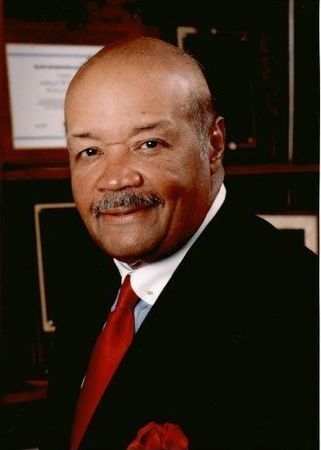
From the outset, the Atlanta chapter was built on the conviction that accomplished Black professionals—men in business, law, government, and academia—could serve as direct, consistent role models for young people facing poverty, under-achievement, and violence. The members pledged to give their time, talent, and resources back to the Atlanta community, and to demonstrate and demand excellence in everything they undertook.
The Birth of 100 Black Men of America, Inc. (1986–1987)
100 Black Men of Atlanta was not founded in isolation. It was one of eight founding 100 Black Men organizations based in cities around the nation that joined forces to create a national body. On October 2, 1986, representatives from those chapters—among them Los Angeles, St. Louis, Indianapolis, and Atlanta—converged on Washington, D.C., at the L'Enfant Plaza Hotel for a final meeting to establish a national organization. There, the name 100 Black Men of America, Inc. was unveiled, and the assembled leaders elected the organization's first founding officers.
Six months later, on May 27, 1987, the newly formed mentoring organization held its first national conference in Atlanta, Georgia, formally introducing itself to the nation. The featured speakers included two giants of Black American life: the late author Alex Haley and the late Mayor Maynard H. Jackson of Atlanta—whose presence underscored the city's centrality to the movement.
Because 100 Black Men of America chose to headquarter in Atlanta, the Atlanta chapter has always occupied a uniquely influential position within the network. Today, 100 Black Men of America, Inc. comprises more than 100 chapters worldwide with more than 10,000 members, and its programs positively impact more than 125,000 youth across the United States and abroad.
The Four Pillars: Mentoring, Education, Enrichment, Empowerment
Every 100 Black Men chapter—and 100 Black Men of Atlanta in particular—operates on a four-pillar framework: Mentoring + Education + Enrichment + Empowerment. The organization describes this as its "solution": mentoring provides the relationship, education provides the pathway, enrichment provides the exposure, and empowerment provides the outcome. Together, the four pillars form the logic behind every program the Atlanta chapter runs, from third-grade tutoring through college scholarship.
The mission statement of 100 Black Men of Atlanta, Inc. puts it plainly: "to improve the quality of life by supporting and enhancing educational and economic opportunities particularly for African-American youth in the Atlanta community." The chapter's stated vision is to become "the city's strongest, most self-reliant African-American volunteer organization focused on education, enrichment and empowerment."
Project Success — The Flagship Program (Since 1987)
If 100 Black Men of Atlanta has a signature program, it is Project Success. Launched in 1987—the same year the national organization held its first conference in Atlanta—Project Success is a nationally recognized post-secondary preparation, tuition-assistance, and mentoring program for Atlanta Public Schools (APS) students. Its premise is radical in its generosity: the 100 Black Men of Atlanta provides tuition-assistance scholarships for every Project Success student who graduates from high school.
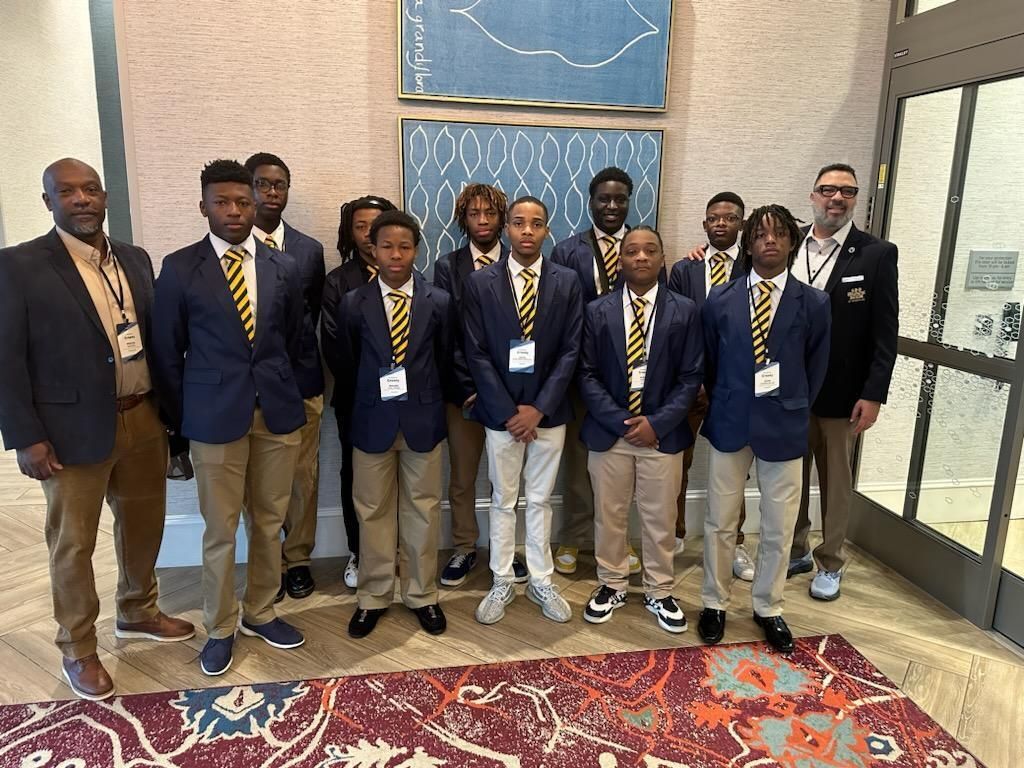
The pipeline is deliberately long. Students enter the program as early as the third grade at participating APS schools in the metro Atlanta area. To become a "100 Scholar," a student must be in the 8th grade at one of the program's participating middle schools, plan to attend a participating high school, and earn either a 3.0 GPA or a 2.5 GPA combined with a 90th-percentile standardized test score. The student's parent or guardian must also demonstrate strong, consistent involvement—an explicit recognition that mentoring works best when families are engaged.
Project Success provides what the organization describes as "nurturing, personalized, and concrete support"—mentoring plus social, emotional, and communication-skill development—particularly during the difficult transition from pre-adolescence to adolescence. The result is one of the most striking statistics in American youth development.
Saturday School, Collegiate 100, and the Multigenerational Model
Project Success does not stand alone. 100 Black Men of Atlanta operates a suite of complementary programs designed to surround a young person with support at every stage. Saturday School extends academic enrichment beyond the school week, giving students structured learning time and exposure to the chapter's professional members. The Collegiate 100 engages college students—many of them former Project Success scholars themselves—in mentoring younger participants, creating a multigenerational mentoring model in which today's mentee becomes tomorrow's mentor.
This multigenerational design is part of what distinguishes 100 Black Men of Atlanta from many mentorship organizations. By drawing mentors from business, law, government, and academia—and by folding alumni back into the pipeline—the chapter ensures that the relationships it builds are not episodic but continuous, often spanning a student's entire path from third grade to college graduation.
Initiatives & Campaigns: Raising Awareness, Delivering Resources
Beyond its core programs, 100 Black Men of Atlanta runs a series of annual initiatives and campaigns designed to raise awareness of its cause and channel concrete help to the young people and families it serves. Through these campaigns, the organization expands its reach beyond the students enrolled in Project Success, extending resources, information, and public-outreach efforts to the broader Atlanta community. Fundraisers and community events throughout the year both generate crucial resources and give Atlantans a direct way to get involved—whether by attending, volunteering, or contributing.
The chapter is also frequently called upon to endorse and support public-policy, economic, social, and health initiatives that align with its mission—a reflection of the credibility 40 years of consistent community work has earned.
By the Numbers: 40 Years of Measurable Impact
The outcomes 100 Black Men of Atlanta reports are the kind most youth-serving nonprofits can only aspire to:
- 100% high school graduation rate for Project Success students.
- $8,500,000 in cumulative scholarship awards to Project Success graduates.
- 95% of graduates are college-bound.
- 100 current program participants in the active Project Success cohort.
- 87% of parents say Project Success is improving their child's overall academic performance and attitude toward school.
These figures are not abstractions. A 100% graduation rate in a city where the academic achievement gap has historically been one of the defining challenges of Black youth is a signal that the chapter's model—sustained mentoring paired with a guaranteed scholarship—works. Eight and a half million dollars in scholarships is the concrete expression of a promise made in 1987 and kept for nearly 40 years.
100 Black Men Chapters Across America and the World
100 Black Men of Atlanta is one chapter within a far larger network. 100 Black Men of America, Inc. today includes more than 100 chapters spanning the United States and abroad, from the founding chapters in New York, Los Angeles, St. Louis, Indianapolis, and Atlanta to newer affiliates across the South, Midwest, and international cities. The national organization is recognized as one of the country's top African-American-led mentoring organizations.
Over its history, 100 Black Men of America has earned national recognition, including the FDIC's honor for promoting financial education (2005), Ebony Magazine's Power 150 and Power 100 designations for national leaders Albert E. Dotson, Jr. (2008) and Curley M. Dossman, Jr. (2015), SCLC/W.O.M.E.N., Inc.'s award for excellence in education (2012), the Big Voice Award from Voices for Georgia's Children (2013), Southern Company's Excellence in Mentoring Award (2015), and the Excellence in Mentoring Award from MENTOR: The National Mentoring Partnership (2016).
Because 100 Black Men of America is headquartered in Atlanta, the Atlanta chapter sits at the organizational and geographic center of that nationwide network—a position that has helped it grow into one of the largest chapters, with more than 200 local members.
The Atlanta Chapter Today: Leadership, Members, and the 100 Honors Gala
Today, 100 Black Men of Atlanta, Inc. operates from its offices at 101 Jackson St., N.E., 2nd Floor, Atlanta, Georgia 30312-1501, and can be reached at (404) 525-6220. The chapter's members are accomplished professionals—business owners, attorneys, government officials, and academics—who give their time as mentors, tutors, and role models.
In 2026, the organization marks 40 years of service, celebrating the milestone at its 100 Honors Gala. For Atlantans who care about the next generation, the anniversary is both a look back at what a committed group of 18 men built in 1986 and a look ahead at the work still to be done.
How to Get Involved: Volunteer, Mentor, Donate
100 Black Men of Atlanta invites the community to "give the gift of hope to a deserving youth." There are three primary ways to support the mission:
- Volunteer — Give your time at programs, Saturday School, events, and fundraisers.
- Mentor — If you are an accomplished professional, consider becoming a member and serving as a role model for a young scholar.
- Donate — Direct contributions help fund the tuition-assistance scholarships that have driven 100% graduation rates and $8.5M in awards.
To apply to Project Success, volunteer, or learn more, visit the official site at 100blackmen-atlanta.org.
Frequently Asked Questions
What is 100 Black Men of Atlanta?
100 Black Men of Atlanta, Inc. is an Atlanta-based African-American volunteer organization founded in 1986 by Nathaniel R. Goldston III to improve the quality of life for Black youth through mentoring, education, enrichment, and empowerment. Its flagship program, Project Success, provides tuition-assistance scholarships to Atlanta Public Schools students.
When was 100 Black Men of Atlanta founded?
100 Black Men of Atlanta was founded in 1986. It is celebrating 40 years of service in 2026 at the 100 Honors Gala.
Who founded 100 Black Men of Atlanta?
The chapter was founded by Atlanta entrepreneur Nathaniel R. Goldston, III, who assembled 18 friends and associates to launch the organization after being inspired by the One Hundred Black Men of New York.
What is the connection between 100 Black Men of Atlanta and 100 Black Men of America?
100 Black Men of Atlanta was one of eight founding chapters that joined forces to create 100 Black Men of America, Inc., which was formally established on October 2, 1986 in Washington, D.C., and held its first national conference on May 27, 1987 in Atlanta. The national organization is headquartered in Atlanta and now includes more than 100 chapters worldwide.
What is Project Success?
Project Success is 100 Black Men of Atlanta's flagship program, launched in 1987. It is a nationally recognized post-secondary preparation, mentoring, and tuition-assistance program for Atlanta Public Schools students. Students who graduate from high school through Project Success receive tuition-assistance scholarships from the organization.
How successful is Project Success?
Project Success reports a 100% high school graduation rate for its students, 95% college-bound graduates, and $8.5 million in cumulative scholarship awards. 87% of parents say the program improves their child's academic performance and attitude toward school.
How can I join or support 100 Black Men of Atlanta?
You can volunteer, become a member (if you are an accomplished professional interested in mentoring), or donate to support scholarships. Visit 100blackmen-atlanta.org or call (404) 525-6220.
Sources & References
Information for this article was compiled from the official 100 Black Men of Atlanta website (100blackmen-atlanta.org), the 100 Black Men of America, Inc. website (100blackmen.org), 11Alive reporting on the organization's history, and the chapter's published mission, history, and program materials.